Explosive Reveal! Google’s ‘Project Suncatcher’ to Launch AI Data Centers into Space by 2027 – A Deep Dive into the Future of Compute
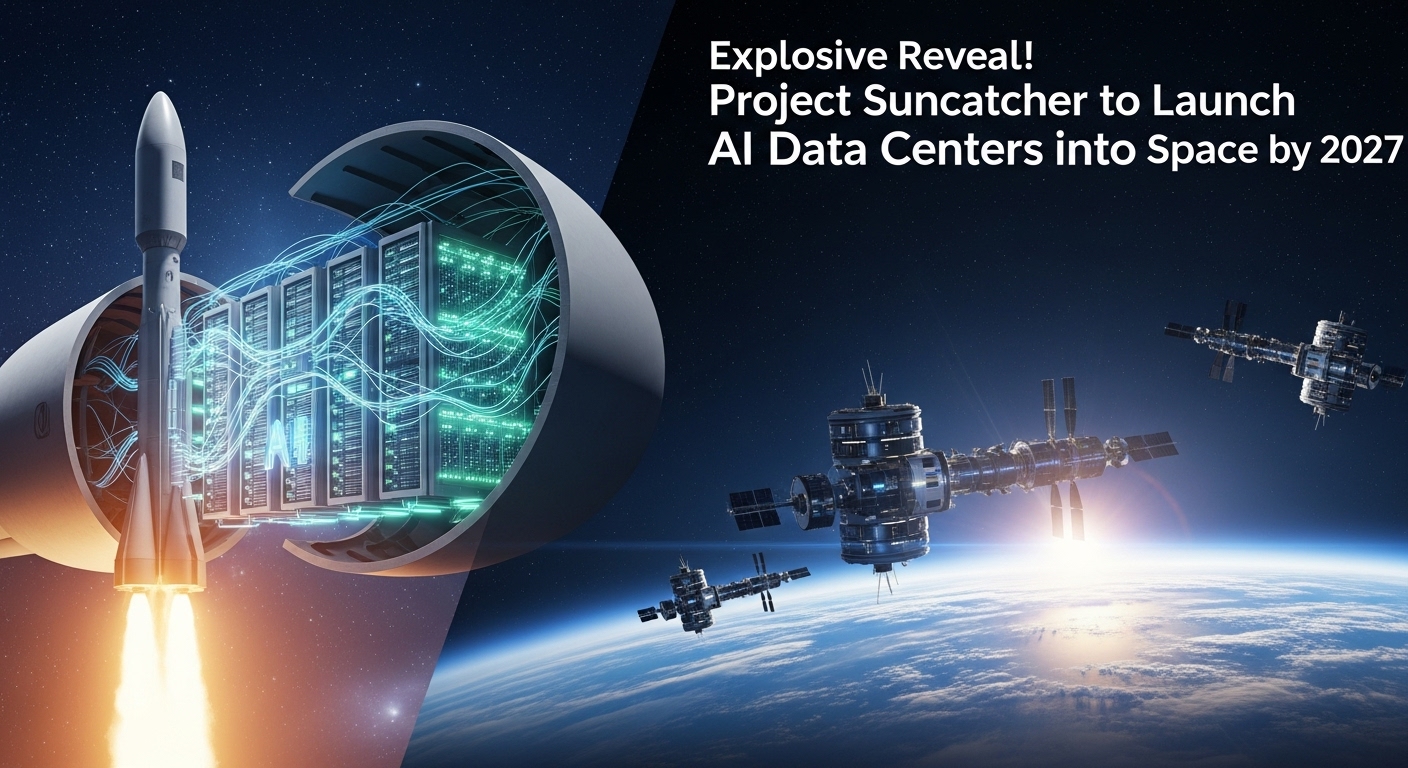
In a groundbreaking announcement that reverberated across the tech and space industries, Google has unveiled “Project Suncatcher,” an ambitious research moonshot aimed at deploying artificial intelligence (AI) data centers into low Earth orbit. With plans to launch the first prototype satellites by early 2027, this initiative represents a bold leap towards addressing the escalating energy demands of AI and pushing the boundaries of computing infrastructure.
The Vision: AI Compute Beyond Earth’s Constraints
At its core, Project Suncatcher envisions a future where compact constellations of solar-powered satellites, each equipped with Google’s custom Tensor Processing Units (TPUs), form an interconnected network capable of handling massive machine learning workloads in space. This “research moonshot” seeks to harness the boundless energy of the sun and minimize the environmental footprint currently associated with terrestrial data centers.
地球軌道を周回し、広大なソーラーパネルで電力を賄う未来的なAIデータセンター衛星群。
Google believes that in the future, space may offer the optimal environment to scale AI compute. The logic is compelling: solar panels in the right orbit can be up to eight times more productive than their Earth-bound counterparts, providing a nearly continuous power supply without the need for extensive battery storage. This potential for “unlimited, low-cost renewable energy” is a significant draw, especially as the global demand for AI data center capacity is projected to surge by 19-22% annually through 2030.
Why Space? Addressing Earth’s Growing AI Footprint
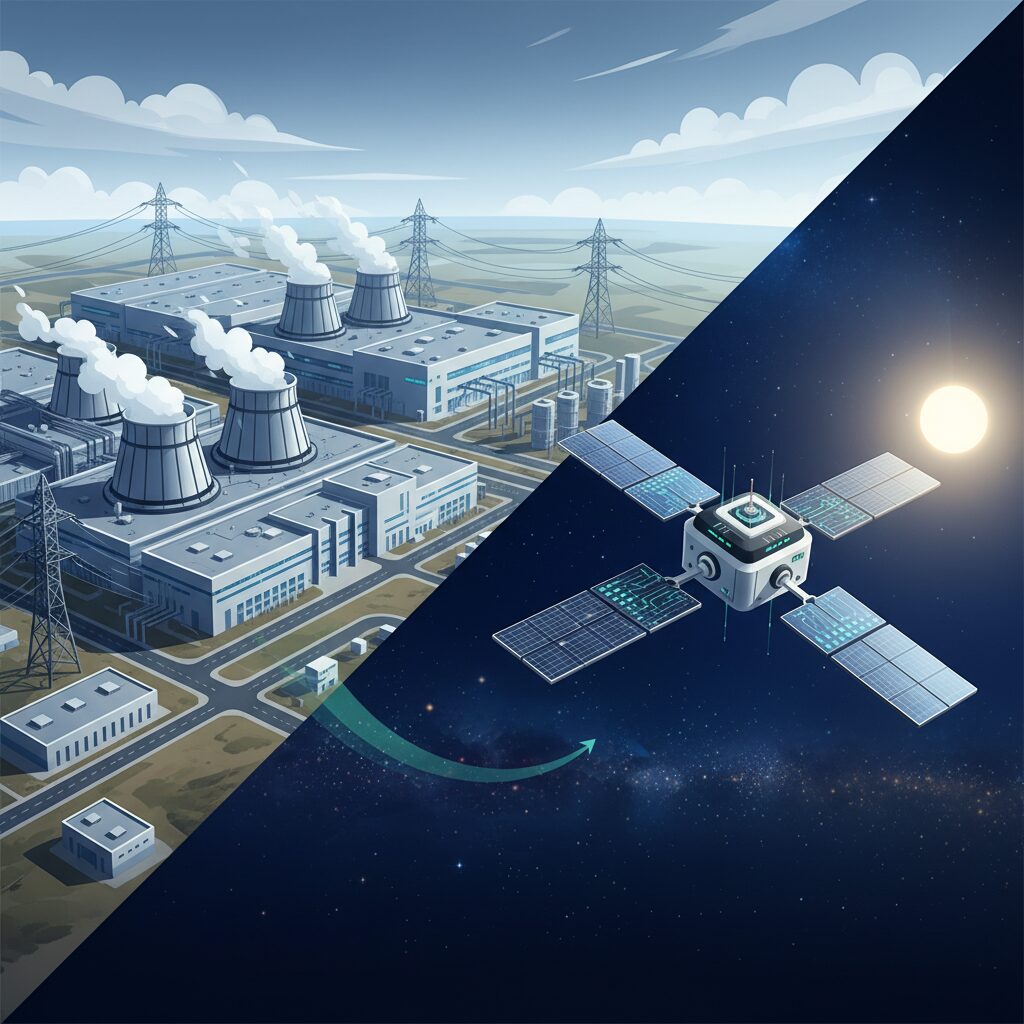
The exponential growth of AI is not without its challenges, particularly concerning energy consumption and environmental impact. Terrestrial data centers consume vast amounts of land, water for cooling, and electricity, raising concerns about carbon emissions if clean energy sources aren’t widely adopted. Project Suncatcher offers a compelling alternative by shifting a portion of this infrastructure off-world. By moving computing into orbit, Google aims to minimize the impact on land and water resources, and despite the carbon emissions from launches, projects “10 times carbon dioxide savings over the life of the data center compared with powering the data center terrestrially.”
地上のデータセンターと宇宙のAI衛星を比較し、環境への利点を強調した画像。
Furthermore, space provides a natural cooling environment, allowing for efficient heat dissipation, a critical factor for high-performance computing. This approach aligns with broader industry discussions about the need for sustainable computing solutions.
The Technology Behind the Moonshot: TPUs and Optical Links
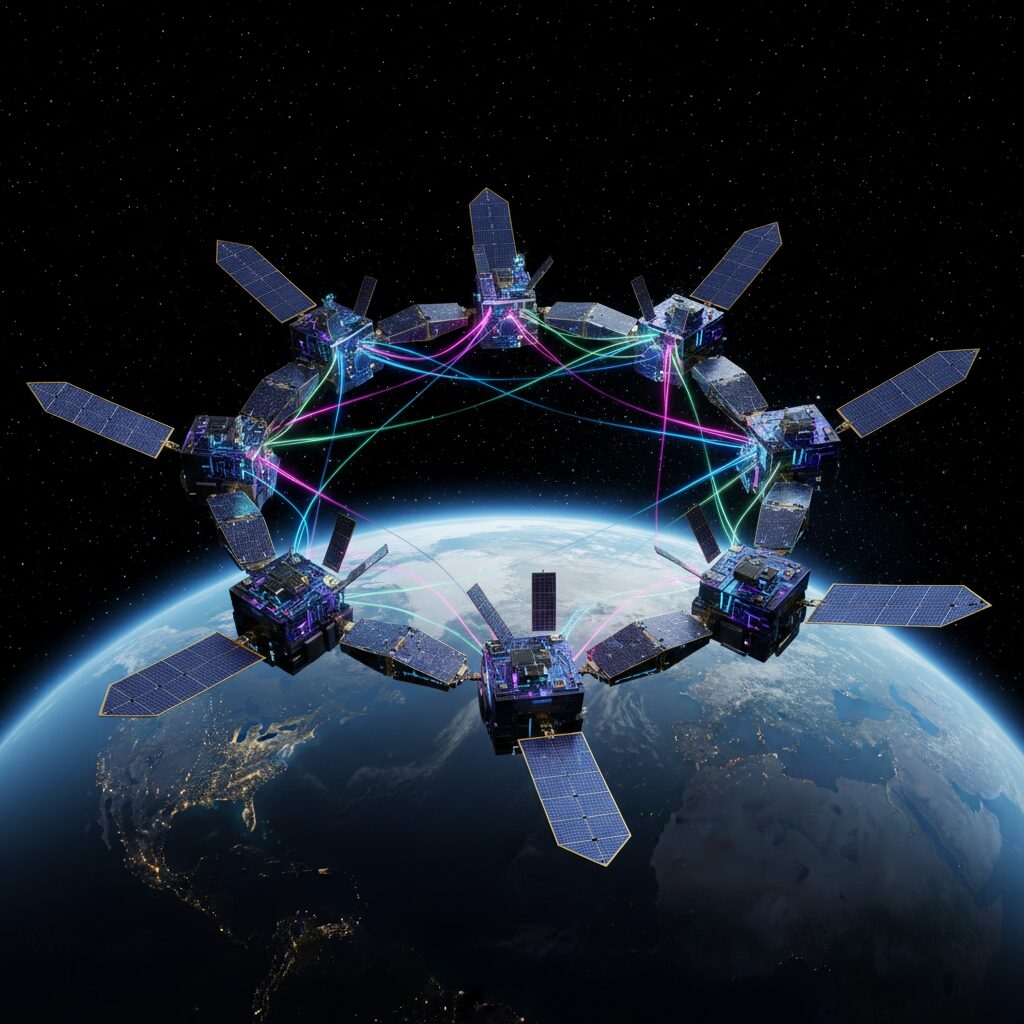
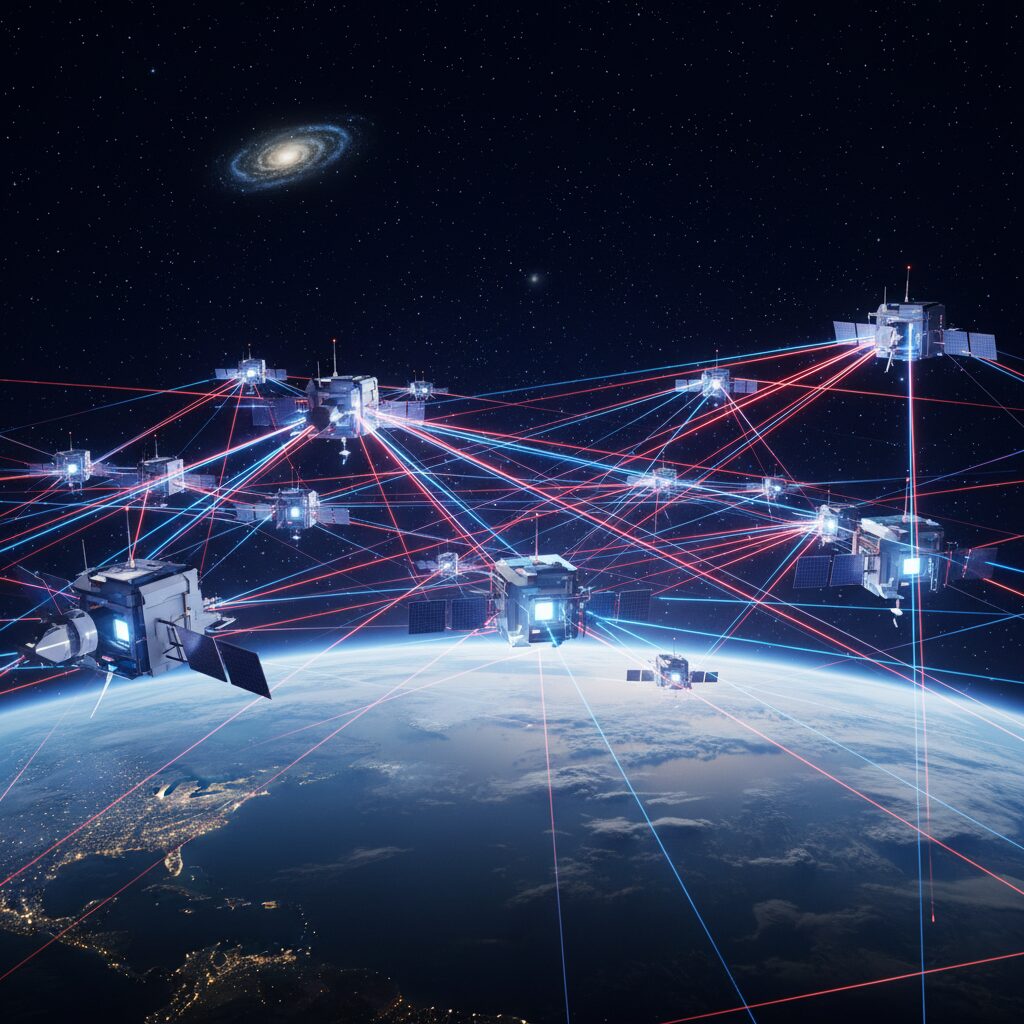
The technical blueprint for Project Suncatcher involves constellations of approximately 80 solar-powered satellites orbiting at an altitude of around 400 miles (650 km). These satellites will be outfitted with Google’s latest Trillium-generation TPUs, processors specifically optimized for AI workloads. A crucial aspect of the design is the use of free-space optical (laser) links to enable high-bandwidth communication between satellites, allowing them to function collectively like a single, distributed data center.
Achieving the targeted “tens of terabits per second” bandwidth requires the satellites to maintain extremely close formations, mere hundreds of meters apart. Google has already demonstrated 1.6 terabits per second transmission in lab conditions, indicating promising progress. The modular design of these interconnected satellites is key to building a highly scalable, future space-based AI infrastructure.
低軌道で密集した相互接続ネットワークを形成するAIデータセンター衛星の概念図。
Overcoming Orbital Hurdles and Future Feasibility
While the vision is ambitious, Google is candid about the significant engineering challenges ahead. These include:
**Thermal Management:** Efficiently dissipating heat from powerful TPUs in the vacuum of space is a complex task.
**Radiation Resilience:** Space exposes electronics to higher levels of radiation. Google has conducted particle accelerator tests on its Trillium TPUs, which showed they could withstand nearly three times the expected five-year mission radiation dose without damage.
**Orbital Dynamics:** Maintaining precise, tight formations for hundreds of satellites in low Earth orbit, contending with gravity anomalies and atmospheric drag, presents a considerable challenge.
**High-Bandwidth Ground Communications:** Ensuring seamless and rapid data transfer between the orbital data centers and Earth is essential.
**On-Orbit System Reliability:** The long-term reliability and maintenance of complex hardware in space remain critical concerns.
Historically, the high cost of rocket launches has been a major barrier for large-scale space infrastructure. However, Google’s research suggests that if launch prices continue to fall, potentially reaching below $200 per kilogram by the mid-2030s, the operational costs of a space-based data center could become comparable to those on Earth. This economic parity could make Project Suncatcher a viable and attractive solution within the next decade.
The Road Ahead: 2027 Prototype Launch and Beyond
Google, in collaboration with satellite company Planet Labs, plans to launch two prototype satellites in early 2027. This initial “learning mission” will be crucial for testing the performance of TPUs and validating the effectiveness of optical inter-satellite links for distributed machine learning tasks in a real-world space environment.
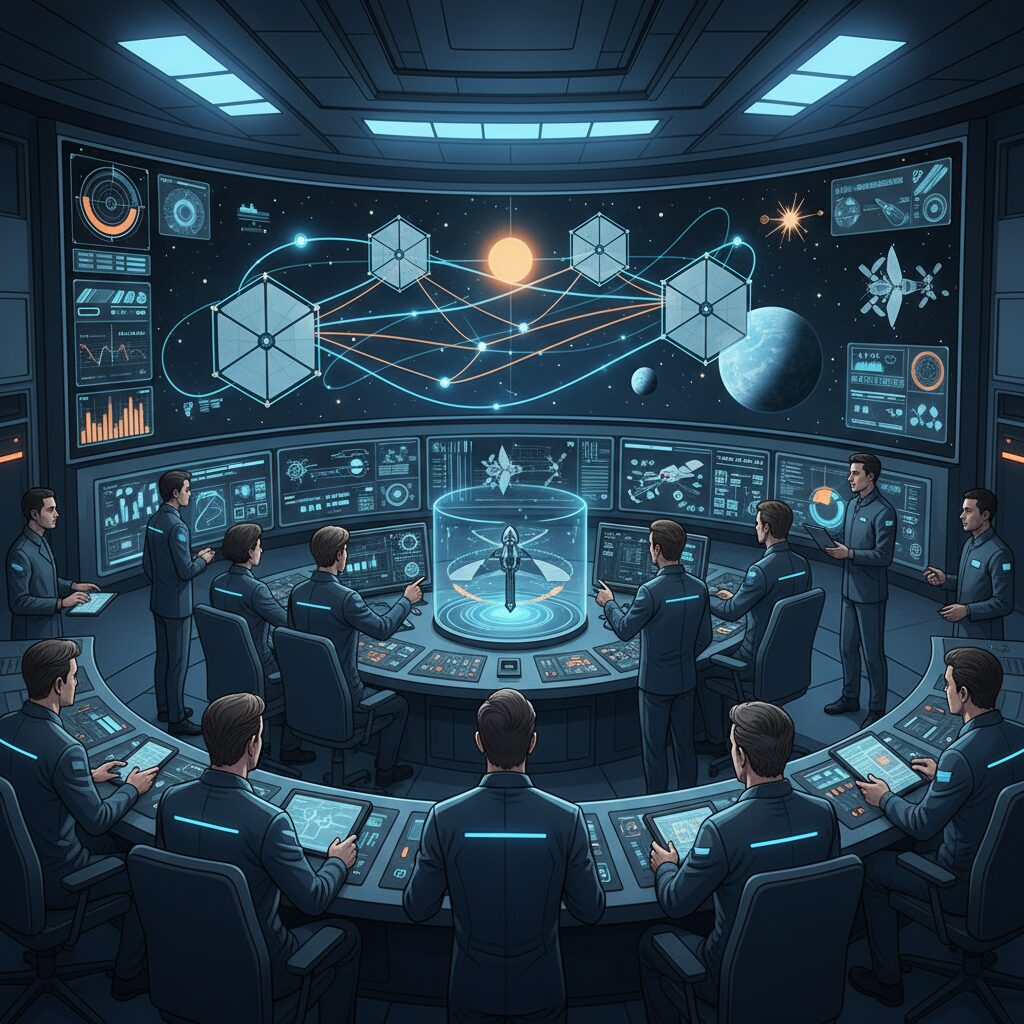
管制室で「Project Suncatcher」のプロトタイプ打ち上げを監督する科学者たち。
While acknowledging the “moonshot” nature of the project and the “significant engineering challenges” that remain, Google CEO Sundar Pichai and Travis Beals, Senior Director for Paradigms of Intelligence at Google, have expressed optimism. Project Suncatcher is a testament to Google’s long tradition of tackling ambitious problems, much like its past endeavors in quantum computing and autonomous vehicles. It represents a bold step towards an era where the vastness of space becomes an integral part of our digital infrastructure, unlocking new possibilities for AI scale and sustainability.